The Spark of Learning: Alumni Spotlight on Ladji Ruffin, Common Good Atlanta
After 23 years of incarceration, Ladji found in the Clemente Course something he didn’t expect: a new way of seeing the world and himself.
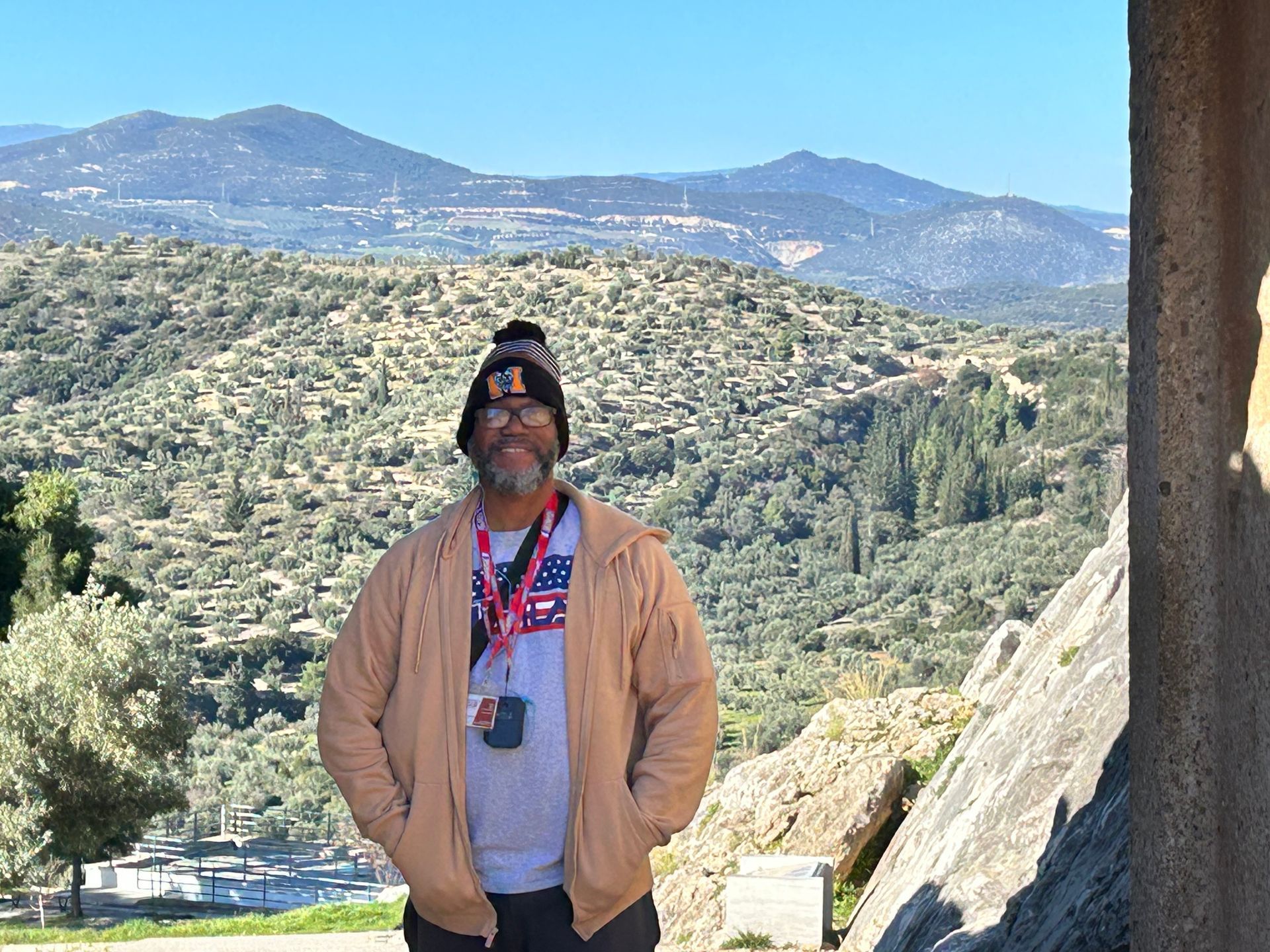
Ladji Ruffin will tell you, with characteristic honesty, that he didn’t come to the Clemente Course for the humanities. He came for the free college credits. But what he found—in the pages of Shakespeare, in a professor who believed in him, in a room full of people from different walks of life—changed everything. “In the end,” he says, “that’s what really got me into Clemente.”
Ladji Ruffin is an alumnus of the
Common Good program in Atlanta, which offers Clemente Courses designed for justice-impacted individuals. He found his way there through the men at Metro Reentry Facility, where he was working as a Forensic Peer Mentor. He watched them read, write, and wrestle with big ideas, and he felt something shift in him.
“I was reading their papers and giving them feedback,” he recalls. “It just sparked for me, that energy of education.”
Learning to Slow Down
Ask Ladji about a text that stuck with him and he doesn’t hesitate: Hamlet. At first, he was skeptical. “I thought, ‘Oh, my God, I don’t like Shakespeare’s writing because I don’t really understand it.’” But Professor Pendergrass worked with them, slowly and patiently.
“It’s kind of like a baby,” he says. “Try this, and try that—and then they like it. After she explained it, you see the nuggets in it. You’re like, oh wow, that’s kind of cool!”
That experience of learning to slow down, to resist the urge to skim and to sit with difficulty, became something much larger for Ladji. He contrasts it directly to the hypervigilance that stayed with him after 23 years of incarceration.
“Coming out of incarceration, we have hypervigilance. We’re always looking, always walking around, we can’t stay focused,” he explains. “Clemente helped me slow down a lot. And that helps me, because it gets me to think about things a little bit more and differently. It allows me to slow down, because if not, I might miss something.”
Studying the humanities with Clemente, he explains, helped him learn to take the time, to go slow, to really listen. The same discipline he applied to rereading Hamlet, he now applies to his work, his relationships, and his role as a father and grandfather.
A Voice He Didn’t Know He Had
Before Clemente, Ladji says he hated writing. A 10-page paper felt like punishment. Now after finishing an undergraduate degree at Mercer University and pursuing a double master’s, writing is less of a chore and more of a joy.
“The Clemente Course helped me, not only with writing, but to trust myself within the writing,” he explains.
That shift, from words as obligation to words as a form of precision and care, extended beyond the academic page and into his professional and personal communication style. “I have to write a lot of emails in my job. I used to just slap something together. It translated not just on the academic level, but on a professional level, down to even a text message.”
Bringing the World Home
The Clemente Common Good professors didn’t just teach Ladji to read more carefully. They encouraged him to go to plays and then discuss it with the class, panel-style. He went, reluctantly at first. Now he’s the self-described “play expert” of his family.
“My wife loves it. My kids love it,” he says, laughing. “I bring my grandson to plays. He came kicking and screaming at first. But now, every time we get on the phone, it’s: when are we going to a play?”
That transmission of curiosity and possibility sits at the heart of why Ladji cares so deeply about what Clemente offers. He thinks often about the options he didn’t have, and what it means to give his children and grandchildren something different.
“As a child growing up, I didn’t really have too many options,” he reflects. “Now I have something to show him, giving him another outlook. Maybe he’ll be a famous writer, or write something like Shakespeare. Who knows! But he has options.”
What Fatherhood Requires
Ladji has three children and four grandchildren. He talks about them the way he talks about everything else he loves, carefully, specifically, with a great deal of pride. Being present for them, he says, is the thing he’s most proud of.
“Regardless of what I accomplish in this world, the best thing I feel I’ve accomplished is that my daughter was able to call me father, and my sons could look at me as a father. My grandkids can look at me as a grandfather. Everything else is nice, but that’s what motivates me, what drives me.”
He draws a direct line from Hamlet to how he talks to his grandchildren. “I try to make sure that when I’m talking to my grandkids, I slow down and really listen. It’s the same thing that Clemente did for me, what Hamlet did. Let me remove what I know. Sometimes you have got to get yourself out of the way in order to learn.”
At the end of his days, Ladji has a ritual. He puts his phone, his laptop, every device, into a red bucket so he can slow down. “When I’m done during the day, I’m done,” he says. “I’m excited to go home and see my family. That’s where I live more than anything.”
Still Sparking
Today, Ladji works at the Georgia Department of Behavioral Health and Developmental Disabilities, helping people navigate mental health challenges and substance use. He’s also a member of the Clemente Alumni Council, a role he takes seriously.
“This is not just me sitting on a board,” he says. “It’s really being in a space to advocate. Sometimes people need to really see [Clemente] in action, living and breathing. I think that I embody it.”
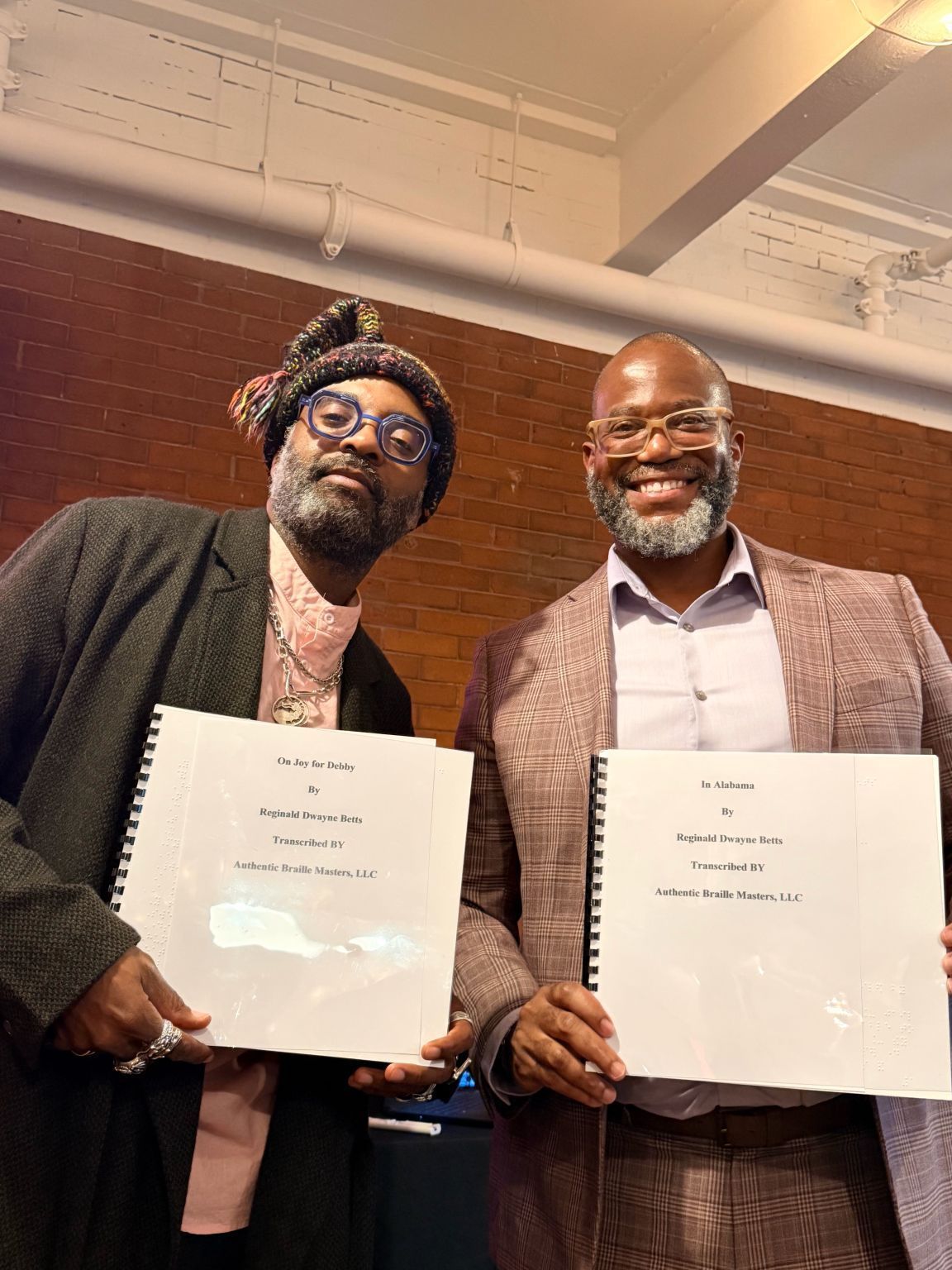
In September, joined the wider Clemente network in Boston to celebrate the 2026 Clemente Course Public Humanities Prize and participate in two days of strategy sessions with Clemente faculty, staff, directors, and other alumni. Through his company, Authentic Braille Masters, LLC, Ladji was also commissioned to create original Braille transcriptions of two poems by Reginald Dwayne Betts, this year’s recipient of the Clemente Public Humanities Prize: “In Alabama,” one of the redacted poems from
Felon, and “On Joy,” from
Doggerel. Ladji presented the transcriptions to Betts in person during the weekend’s celebration.
What he wants people to know about Clemente is simple, and he says it plainly:
“Don’t just look at it as academics. Yes, it’s college credits, but you can apply this to your everyday life. It translates into you as a person. It translates to your life.”